Tiny Land Guide: Wooden Play Kitchens, Teepees & Organic Play Food for Imaginative Learning

Children’s play spaces have changed significantly as parents increasingly look for toys that do more than simply entertain.
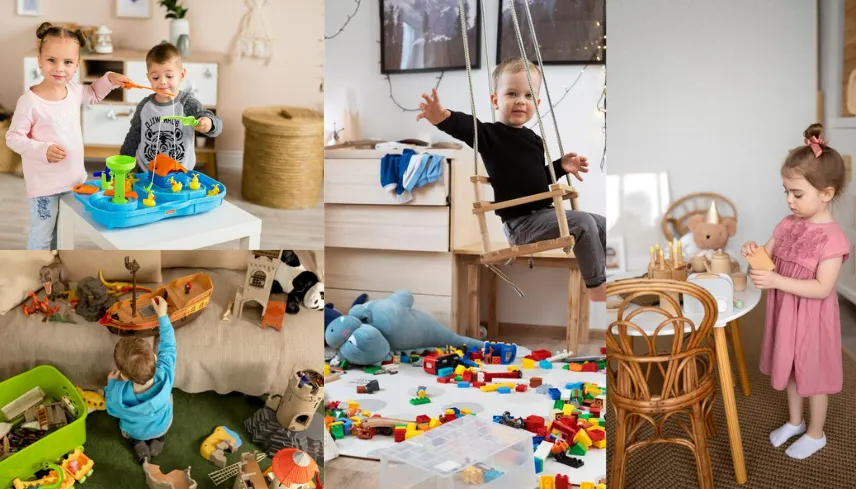
Children’s play spaces have changed significantly as parents increasingly look for toys that do more than simply entertain. Modern playroom design now focuses on creativity, independence, sensory development, and real-world learning through open-ended play. Instead of filling children’s rooms with disconnected toys, many families are building thoughtful play environments where each piece supports imagination, organization, and developmental growth.
Tiny Land fits naturally into this modern parenting approach by offering beautifully designed toys that combine Montessori-inspired learning with soft, home-friendly aesthetics. Their wooden play kitchens, teepees, and organic play food sets are not only visually appealing but also designed to encourage roleplay, storytelling, social interaction, and practical life skills. Together, these products help create a complete pretend-play environment where children can cook, shop, host, hide, read, and imagine in ways that feel engaging and meaningful.
In this guide, we will explore three standout Tiny Land products: the Wooden Play Kitchen with Storage, the Kids Teepee, and the Organic Play Food Bundle. Each product supports a different part of childhood play, but together they create a complete playroom system built around creativity, comfort, and educational value.
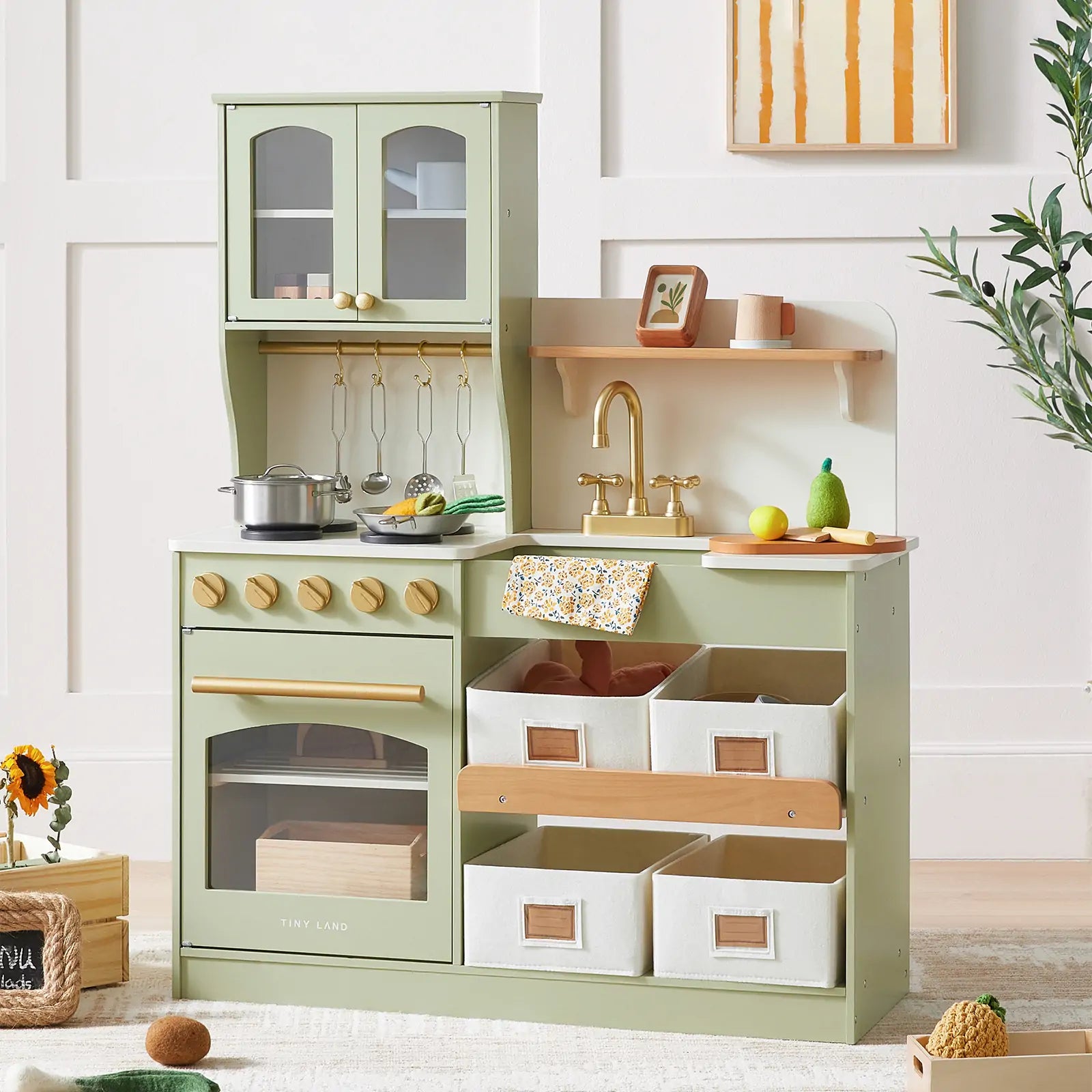
Tiny Land Wooden Play Kitchen with Storage: Practical Life Play for Creative Toddlers
The Tiny Land Wooden Play Kitchen with Storage is designed around one of the most valuable forms of early childhood play: imitation. Children naturally observe daily household routines, and a play kitchen allows them to recreate those experiences in a safe, imaginative, and hands-on way. Through pretend cooking, serving, cleaning, organizing, and sharing, toddlers begin to understand everyday responsibilities while building confidence and independence. The added storage also makes the kitchen more practical for parents because play food, utensils, and accessories can be organized neatly instead of spreading across the room.
What makes a wooden play kitchen especially valuable is its ability to support open-ended play. A child can use the same kitchen as a restaurant one day, a family dinner setup the next day, and a pretend bakery or grocery counter later. This flexibility keeps the toy relevant for longer and allows children to create their own stories rather than following a fixed play pattern. The wooden construction also gives the kitchen a more durable and premium feel compared to lightweight plastic alternatives, which is especially important for families who want toys that can withstand daily use.
From a playroom design perspective, the Tiny Land kitchen also works well because it blends function with aesthetics. Its neutral, wooden look feels calmer and more intentional than brightly colored toy furniture, making it easier to integrate into modern homes. For parents who prefer Montessori-style spaces or minimal playroom layouts, this type of kitchen becomes both a developmental toy and a beautiful room feature.
Tiny Land Kids Teepee: A Cozy Space for Reading, Resting & Imaginative Play
The Tiny Land Kids Teepee adds a completely different dimension to the playroom by creating a dedicated space for comfort, privacy, and imagination. Children often enjoy having small enclosed spaces that feel like their own, and a teepee gives them a cozy environment where they can read books, play quietly, build stories, or simply relax. This kind of personal play corner can be especially helpful in busy households where children benefit from having a soft space to reset between more active activities.
A teepee also supports imaginative storytelling in a way that traditional toys sometimes cannot. It can become a campsite, a reading nook, a tiny house, a secret hideaway, or part of a larger pretend-play world connected to the kitchen and food sets. Because the structure is simple, children are free to decide what it becomes, which supports creativity and independent thinking. The best play spaces are often the ones that do not over-direct the child, and a teepee offers exactly that kind of open-ended environment.
From a parent’s perspective, the teepee also contributes to the overall atmosphere of a playroom. It adds softness, height, and visual warmth while creating a clear zone for calmer activities. When paired with cushions, blankets, books, or plush toys, it becomes a comfortable retreat that supports both play and rest. This makes it a valuable addition for families trying to balance active pretend play with quieter moments throughout the day.

Tiny Land Organic Play Food Bundle: Realistic Pretend Food for Hands-On Learning
The Tiny Land Organic Play Food Bundle completes the pretend-play environment by giving children realistic ingredients to use within their kitchen setup. Instead of relying on generic toy food, this bundle introduces children to grocery-style items, fruits, vegetables, pantry goods, and meal-building concepts in a way that feels familiar and engaging. When children handle pretend food, sort ingredients, prepare meals, and serve others, they naturally practice categorization, fine motor coordination, communication, and creative storytelling.
One of the strongest benefits of realistic play food is how closely it connects play to everyday life. Children see adults cooking, shopping, organizing groceries, and preparing meals, so pretend food allows them to process those experiences through play. This can also support early food awareness because children begin recognizing different food types, meal combinations, and healthy eating concepts in a relaxed and pressure-free way. Instead of turning nutrition into a lesson, the play food bundle makes food exploration feel natural and fun.
The Organic Play Food Bundle also works especially well when paired with the Tiny Land Wooden Play Kitchen. The kitchen provides the environment, while the food creates the action and storytelling. Children can pretend to shop, cook, serve, clean up, and host meals, which turns a simple toy setup into a much richer learning experience. Because the pieces are visually softer and more realistic, they also match modern playroom aesthetics better than overly bright plastic alternatives.

Conclusion: Thoughtful Playroom Pieces for Creative Childhood Learning
A well-designed playroom is not about having the most toys. It is about choosing pieces that invite imagination, support development, and fit naturally into daily family life. The Tiny Land Wooden Play Kitchen with Storage, Kids Teepee, and Organic Play Food Bundle work together to create a rich play environment where children can practice real-world routines, build stories, explore food, and enjoy moments of comfort and creativity.
By combining practical life play, cozy imaginative space, and realistic pretend food, Tiny Land helps parents create a playroom that feels both beautiful and meaningful. These products are especially valuable for families looking to move away from cluttered, overstimulating toys and toward a calmer, more intentional play experience.
Call to Action
If you are looking to build a more creative, organized, and development-focused playroom, explore Tiny Land’s collection and choose pieces that support imaginative learning, practical life play, and cozy everyday childhood moments.
Recent Blogs
-
The Ultimate At-Home Soccer Training Setup: 3 Essentials Every Player Needs
-

Flawless Beauty Essentials: The Natasha Denona Products Worth Adding to Your Makeup Collection
-

The Secret to Invisible Underwear: Finding Styles That Disappear Under Clothes
-
Transform Your Sleep Experience with Origin Mattress
-

Minimal Effort, Maximum Elegance: The Power of Modern Knit & Pleated Silhouettes